Making the pulmonary hypertension diagnosis
There are several tests that lead to suspicion of pulmonary arterial hypertension (PAH). When a patient complains of shortness of breath an echocardiogram, or ultrasound of the heart, is usually one of the first tests performed. This test can estimate the pressure in the pulmonary arteries and allows the physician to measure the size of the right ventricle and right atrium. It also allows for physicians to evaluate for other diseases that could cause shortness of breath. An echocardiogram report may list a diagnosis of pulmonary hypertension and state pressures are elevated but this does not make a diagnosis of pulmonary arterial hypertension. The pressures are estimated and there is no way to collect accurate hemodynamic data by ultra sound.
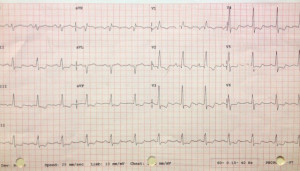
An EKG or ECG is a test that measures the electrical activity of the heart. This is a common test done for patients with shortness of breath. There is a characterstic pattern of findings in advanced PAH.
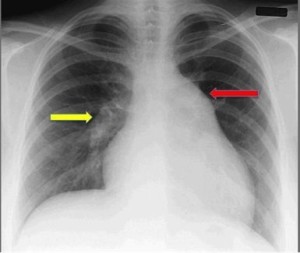
A chest XRAY is a basic test that is quick and easy to perform. Every patient with complaints of shortness of breath should have a chest XRAY at some time. In advanced disease, there are characteristic abnormalities on this test.
A CT scan of the chest is another more sophisticated imaging test. Findings of enlarged pulmonary arteries and lack of other significant lung disease would warrant follow up testing to rule out pulmonary hypertension but cannot be used to make the diagnosis.
Pulmonary Function Testing is a group of tests that measure different parts of the lung system’s function. A lung doctor interprets these tests. There is a characterstic pattern that can suggest PAH. Many patients are incorrectly told that they have asthma to explain their shortness of breath. This test can help point the doctor in the correct direction.
A right heart catheterization is the only way to officially diagnosis pulmonary arterial hypertension as it is the only way to accurately directly measure the pressures in the pulmonary arteries and the wedge pressure. Both of these hemodynamic measurements are required for diagnosis. In most cases, treatment for pulmonary hypertension should not be initiated before a right heart catheterization is performed because there are many diseases that mimic pulmonary arterial hypertension and the treatments for PAH can be harmful if used when other diseases are present.