Pulmonary arterial hypertension (PAH) is a progressive disease affecting the arteries of the lungs. The pulmonary arteries are the vessels that carry blood from the right side of the heart through the lungs. The official definition requires specific hemodynamic parameters (measurements of the forces involved in the circulation of blood through the body) be measured and met. Unlike general hypertension otherwise known as high blood pressure, pulmonary arterial hypertension (PAH) cannot be easily measured with a blood pressure cuff. There are several tests such as echocardiograms that may point towards a diagnosis of pulmonary arterial hypertension (PAH) but right heart catheterization is the only way to definitively measure the required hemodynamics necessary to make the diagnosis.
Pulmonary hypertension definition
The hemodynamic definition of pulmonary arterial hypertension (PAH) is a mean pulmonary artery pressure at rest greater than or equal to 20 mmHg in the presence of a pulmonary capillary wedge pressure less than or equal to 15 mmHg. A normal mean pulmonary artery pressure for a healthy patient is 12-16 mmHg and a normal wedge pressure is 6-12 mmHg. Basically, the pressures in the right side of the heart and the pulmonary arteries are elevated while the pressures in the left side of the heart are normal. These specific pressures can only be measured accurately via right heart catheterization.
How does pulmonary hypertension affect my body?
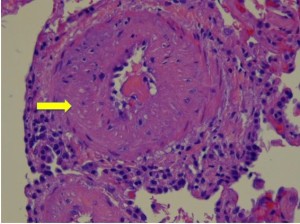
The pulmonary arteries in PH patients are being assaulted by three main problems. Vasoconstriction, meaning the blood vessels are tightening, and cell proliferation, meaning the cells on the inside of the blood vessels are multiplying. This causes the vessel to become thicker and stiffer. Lastly, blood clots may form inside the blood vessels of the lungs. This further obstructs blood flow. Healthy vessels start out like open pipes that the blood can easily travel through and as the disease progresses the pipes become more obstructed. As the vessels become narrower the pressure inside the vesssels becomes higher much like when you block the end of a garden hose with your thumb and the water squirts out at a higher pressure. The increased pressure of the blood flow does additional damage to the diseased arteries. Blood thinners are often used as part of the treatment plan for pulmonary hypertension patients to help prevent small blood clots from forming inside the diseased blood vessels.
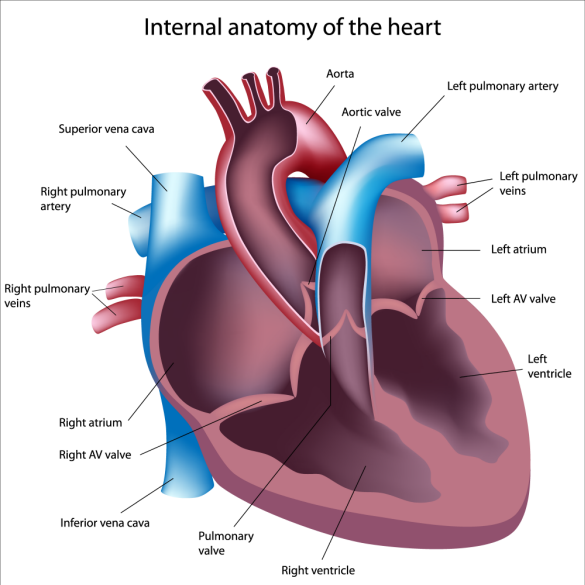
It is important to remember that the pulmonary blood vessels are a low pressure system much different than the rest of the blood vessels throughout your body. The left side of the heart is designed to be the work horse, large and muscular, generating enough pressure to propel blood flow throughout your entire body. The right side of the heart is the smaller gentler side of the heart, supplying a gentler blood flow to the blood vessels in the lungs. In pulmonary arterial hypertension (PAH), the right side of the heart has to work harder and harder to pump against the increased pressure in the pulmonary arteries. Just like any muscle that is constantly worked, it grows bigger. Unfortunately, when the right side of the heart grows bigger it starts to take over space the left heart needs to effectively pump. As the size of the right atrium and ventricle increases, the ability for the chambers to efficiently pump blood diminishes, eventually leading to right heart failure.